The secret to fluffy pancakes and melt-in-your-mouth biscuits doesn’t haven to come from a carton. Learn how to make a DIY buttermilk substitute in just 5 minutes using two simple ingredients.
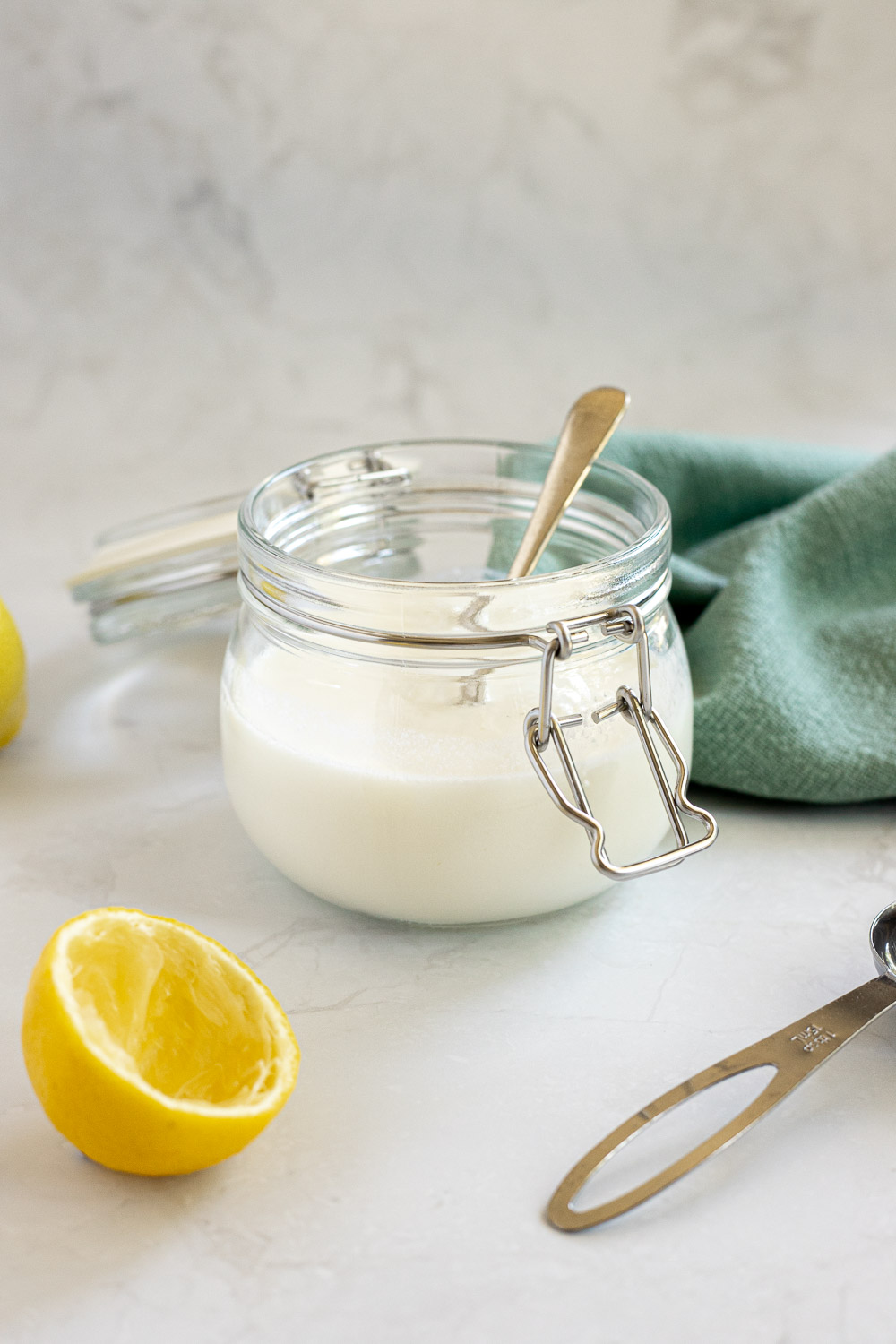
Buttermilk probably isn’t on your weekly shopping list. Whether you forgot to pick some up at the store, didn’t want to commit to an entire carton, or had the sudden urge to whip up buttermilk pancakes at an unsociable hour, a quick homemade version is a handy trick to have up your sleeve.
Over the years, I’ve tried a number of substitutes and have found milk combined with lemon juice or vinegar to be the quickest and easiest method. Essentially, curdled milk. Does it taste exactly like the real thing? Not quite — but in baking, it’s more about the acid anyway.
What is Buttermilk?
Well, it depends on who you ask. The buttermilk your grandmother grew up with is probably not the buttermilk you’ll find on the grocery store shelf today.
Traditionally, buttermilk was the liquid left over from churning butter, hence the name. Modern buttermilk, commonly referred to as “cultured buttermilk” is produced similarly to yogurt: active bacterial cultures (the good kind of bacteria) are added to low-fat milk and left to ferment. This fermentation process turns the milk sugars into lactic acid, giving buttermilk its characteristic tang and thick consistency.
Why Bake With Buttermilk
- Leavening: The acidity in buttermilk reacts with baking soda to form tiny carbon dioxide bubbles, helping baked goods rise.
- Tenderness: The acids also break down gluten proteins, resulting in a softer, more tender crumb.
- Moisture: Buttermilk adds richness and keeps baked goods wonderfully moist, helping them stay fresh longer without drying out.
When (and When Not) to Use a Buttermilk Substitute
Real, cultured buttermilk has a more complex flavour than what you can mimic at home. However, homemade versions are a perfectly acceptable shortcut in most baking recipes.
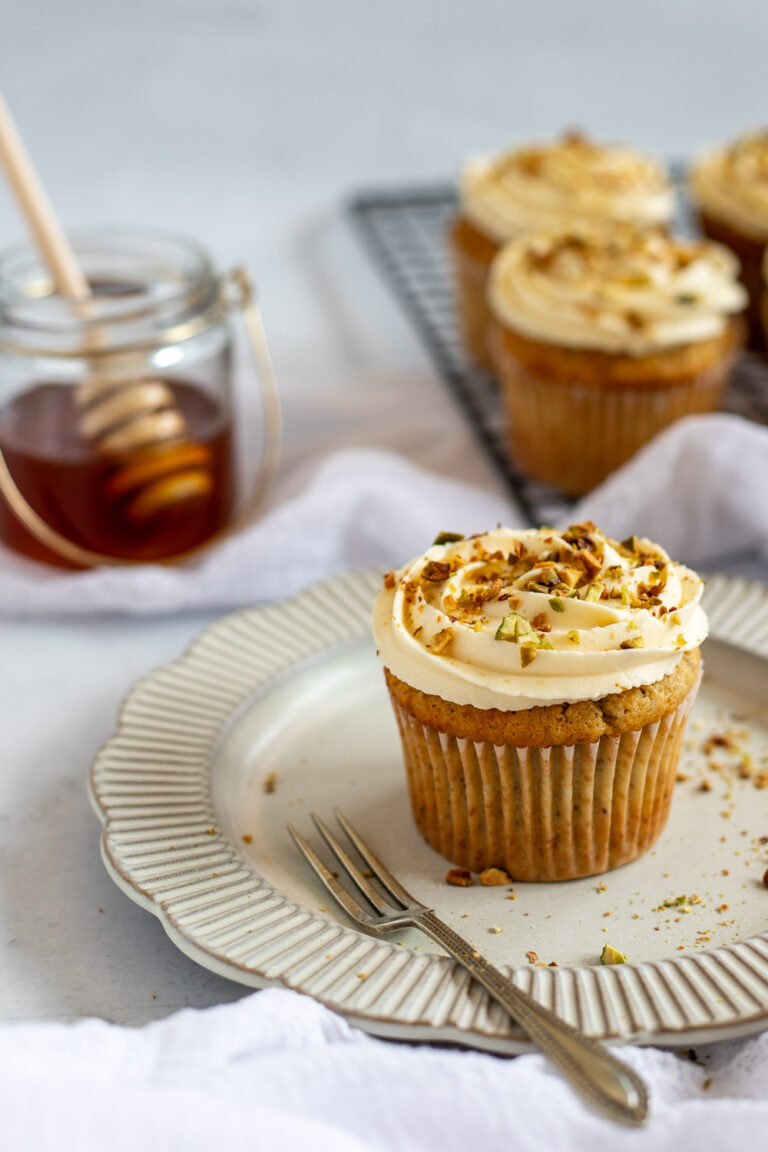
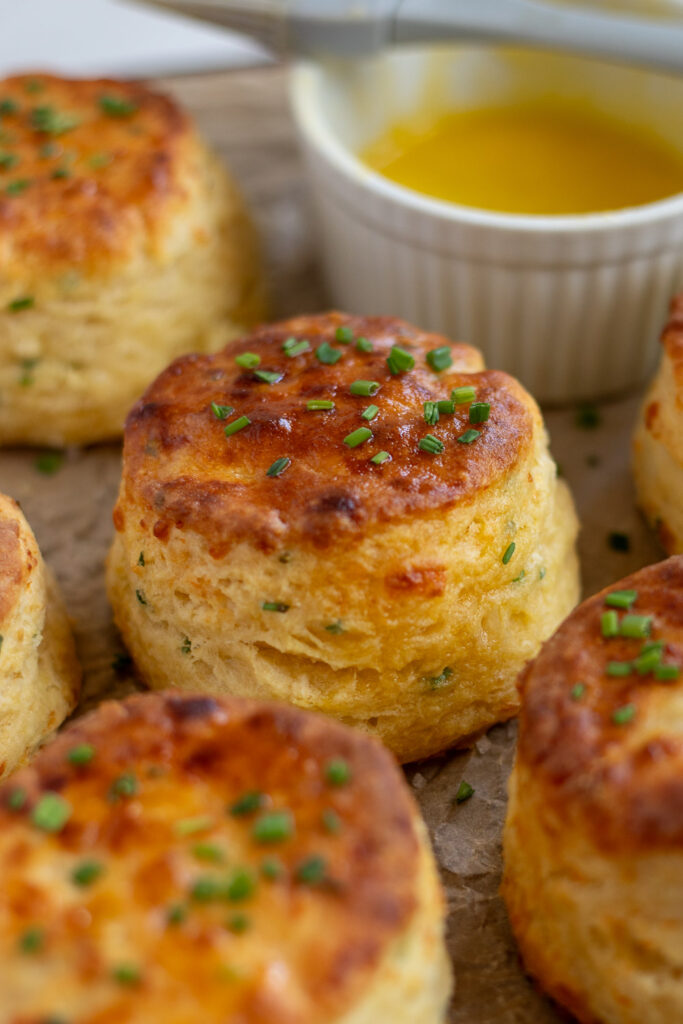
Use buttermilk substitute for: cakes, muffins, quick breads, pancakes, scones, marinades — basically anything where buttermilk is needed for acidity rather than flavour. Try it in my cheddar chive biscuits or pistachio cupcakes!
Skip the substitute for: dressings, condiments, and beverages. If a recipe relies on buttermilk’s distinct, tangy flavour, nothing beats the real thing.

What You’ll Need
- Milk: Store-bought buttermilk is thick, so I’d recommend using full-cream milk to mimic its consistency. If low-fat milk or dairy-free milk is all you have on hand, these will work too, but the end product won’t taste as moist or rich. It’s best to avoid fat-free (skim) milk altogether.
- Lemon juice or vinegar: Fresh lemon juice is ideal, but bottled will work too. If opting for vinegar, stick to a mild, light-coloured vinegar such as white distilled vinegar or apple cider vinegar.
How to Make DIY Buttermilk Substitute
Making a buttermilk substitute really couldn’t be simpler.
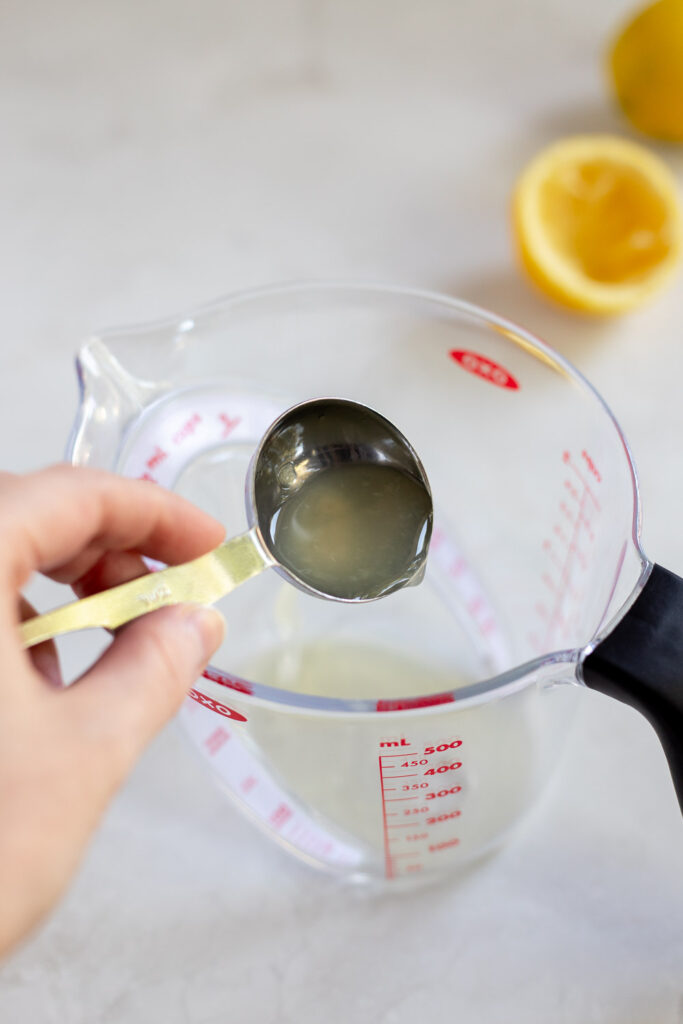
Start by adding your chosen acid to a measuring jug, then top it with milk to reach the required amount. After a quick stir, leave the mixture at room temperature for 5-10 minutes. If the milk looks a little lumpy and curdled, that’s a good sign (albeit a bit unappetising).
You can substitute this 1:1 in just about any recipe that calls for buttermilk.
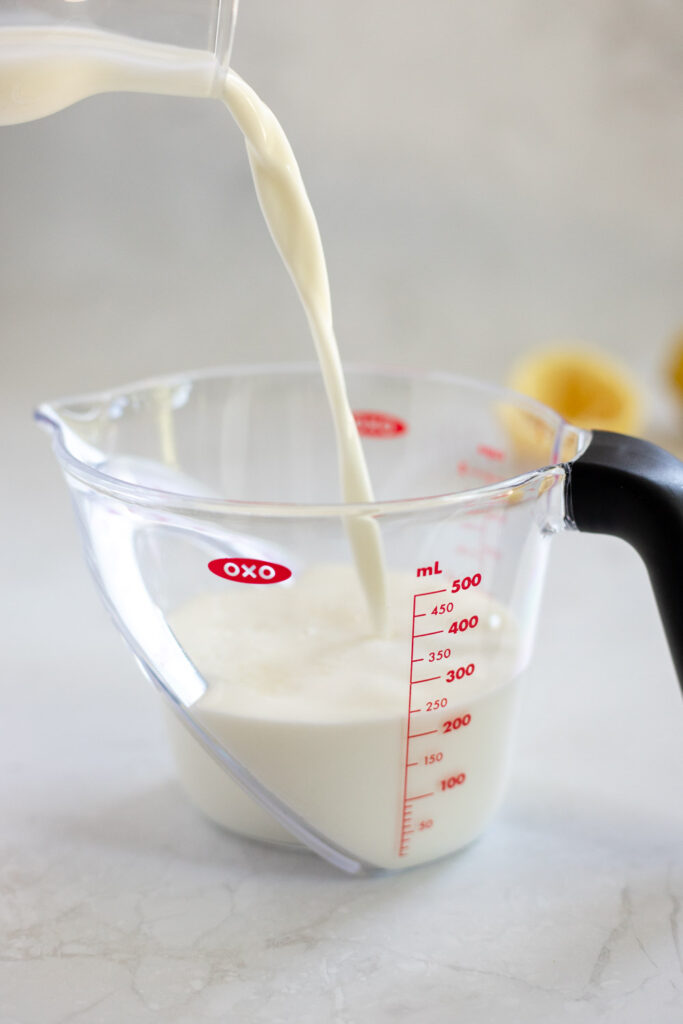
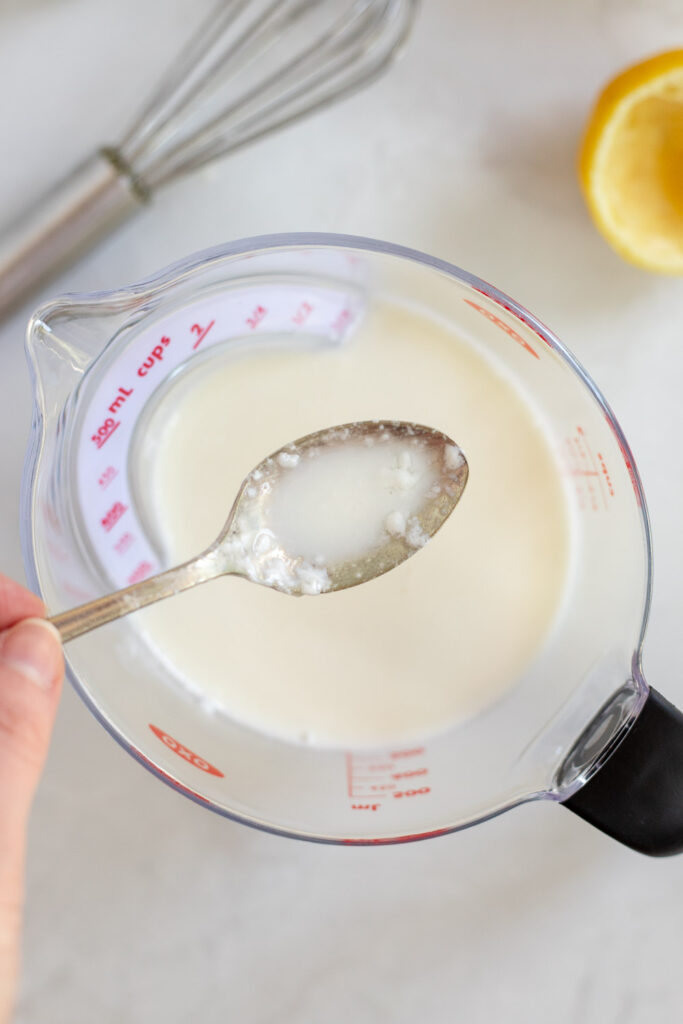
*Note: Dairy-free milks are fine to use, but they won’t curdle in the same way that cow’s milk does. They’ll typically have a more grainy or separated appearance.
Making Buttermilk: Acid-to-Milk Ratios
Don’t want to make a full cup? You can make exactly the amount of buttermilk you need for any recipe. Check out the table below for different yields — I’ve done the math so you don’t have to.
|
Buttermilk needed |
Lemon juice or vinegar |
Milk |
|---|---|---|
|
1/4 cup |
3/4 tsp |
Top up to 1/4 cup |
|
1/3 cup |
1 tsp |
Top up to 1/3 cup |
|
1/2 cup |
1 1/2 tsp |
Top up to 1/2 cup |
|
2/3 cup |
2 tsp |
Top up to 2/3 cup |
|
3/4 cup |
2 1/4 tsp |
Top up to 3/4 cup |
|
1 cup (250 ml) |
1 tbsp |
Top up to 1 cup |
More Good Substitutes: Greek Yogurt and Sour Cream!
Many bakers swear by using plain greek yogurt or sour cream in place of buttermilk. Both are naturally acidic with similar PH levels to store-bought buttermilk, so there’s no need to add lemon juice or vinegar before using.
To match the consistency of buttermilk, you’ll need to thin it out with milk or water, then measure the amount needed for the recipe. A good starting point is 3/4 cup yogurt or sour cream to 1/4 cup milk or water. You may need to dilute it more or less, depending on the thickness of the brand you’re using.
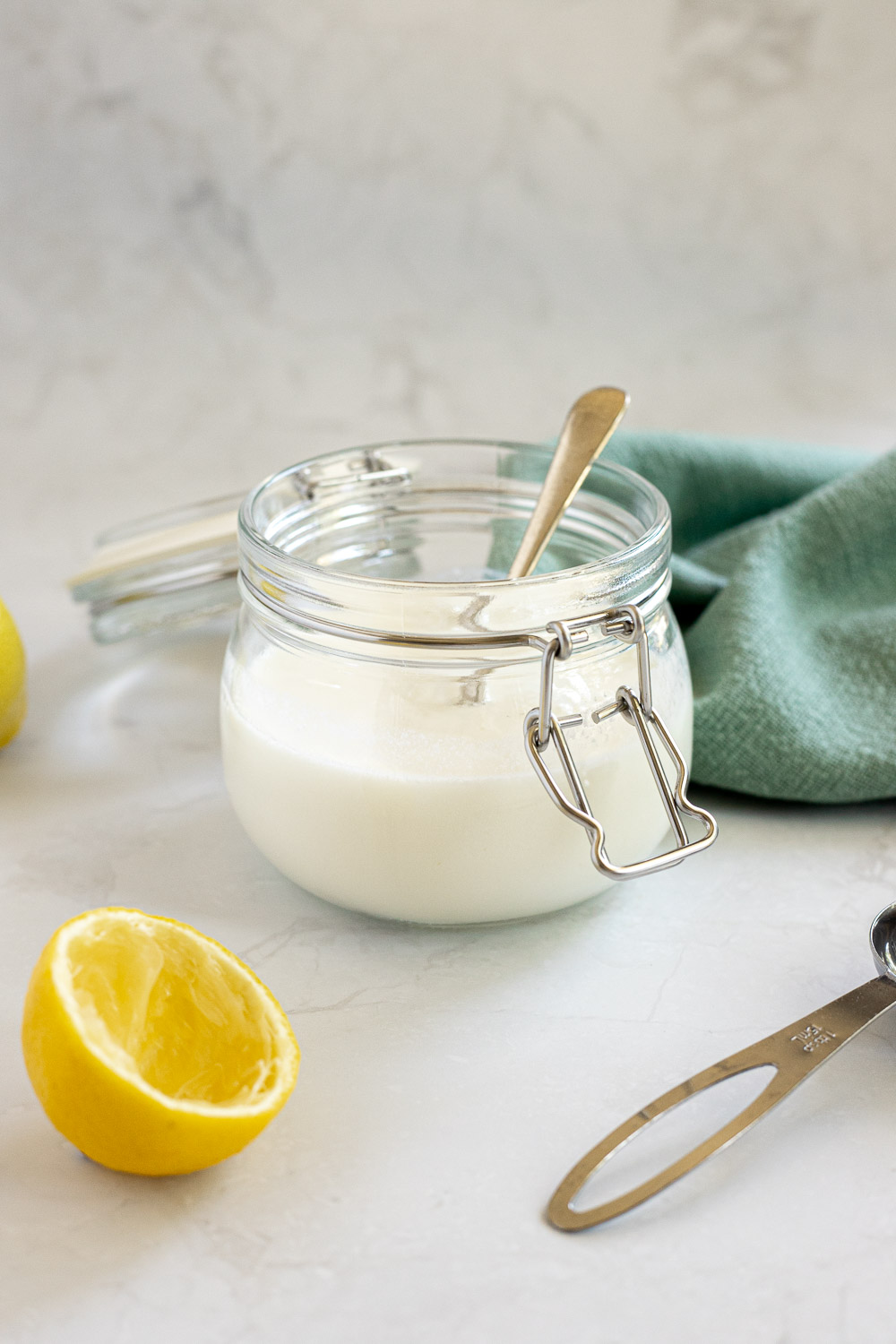
DIY Buttermilk Substitute
* Please note: all cup measurements are approximate and based on Australian standard cups (250ml). For best results, weigh your ingredients with a kitchen scale.
Equipment
- liquid measuring jug
Ingredients
- 230-235 ml (1 'scant' cup) milk of choice, full-cream is best, low-fat and dairy-free also OK
- 1 tbsp lemon juice or vinegar, use white distilled vinegar or apple cider vinegar
Instructions
- Add 1 tbsp of lemon juice OR vinegar to a liquid measuring jug.
- Top up with milk until it reaches the 250ml (1 cup) line.
- Give the mixture a quick stir and leave at room temperature for 5-10 minutes.
- The milk should look slightly curdled, at which point it's ready to use!