* Please note: all cup measurements are approximate and based on Australian standard cups (250ml). For best results, weigh your ingredients with a kitchen scale.
Equipment
- stand mixer with dough hook, optional (can knead by hand)
- 23 cm (9-inch) square baking tin, see notes for alternatives
Ingredients
- 330 g (2 ¾ cups, spooned and levelled) bread flour, sub plain (all-purpose) flour
- 2 ¼ tsp (1 x 7 g packet) instant yeast, see notes for active dry yeast
- 1 ½ tsp salt
- 1 tbsp honey
- 60 ml (¼ cup) olive oil
- 1 egg + 1 egg yolk, room temperature
- 140 ml (½ cup + 1 tbsp) warm water
- egg wash, 1 egg + 1 tbsp water or milk
For the filling
- 100 g (½ cup) homemade or store-bought pesto, drained of excess oil
- 40 g (½ cup) parmesan, grated, plus extra for serving
- 120 g (1 ¼ cup) mozzarella (firm, low-moisture kind), shredded
- ¼-½ tsp chilli flakes, adjust to taste
Instructions
Make the dough
- Add the bread flour to a large bowl, or the bowl of a stand mixer fitted with the dough hook. Place the salt and yeast on opposite sides, then add the remaining dough ingredients. Mix just until a rough ball forms.
- Knead for 8-12 minutes in a stand mixer on low speed or 12-15 minutes by hand, until the dough is smooth, elastic, and slightly tacky. If you're unsure whether it's kneaded enough, do the windowpane test (see blog post for details).
- Transfer the dough to a large, lightly greased bowl. Cover and let rise for about 1 hour, or until doubled in size.
Assemble the scrolls
- Line a 23 cm (9-inch) square baking tin with parchment paper, leaving some overhang on the sides for easy removal.
- Punch the dough down to deflate it, then turn it out onto the lightly floured sheet of parchment paper. Shape the dough into a rough rectangle, then roll it out to approximately 25 x 30 cm (10 x 12 in).
- Spread the pesto in an even layer over the dough. Sprinkle with chilli flakes (if using), followed by the parmesan and mozzarella.
- Starting with one of the long edges, use the parchment paper to help roll the dough into a log, peeling the paper away as you go. Finish with the seam side down.
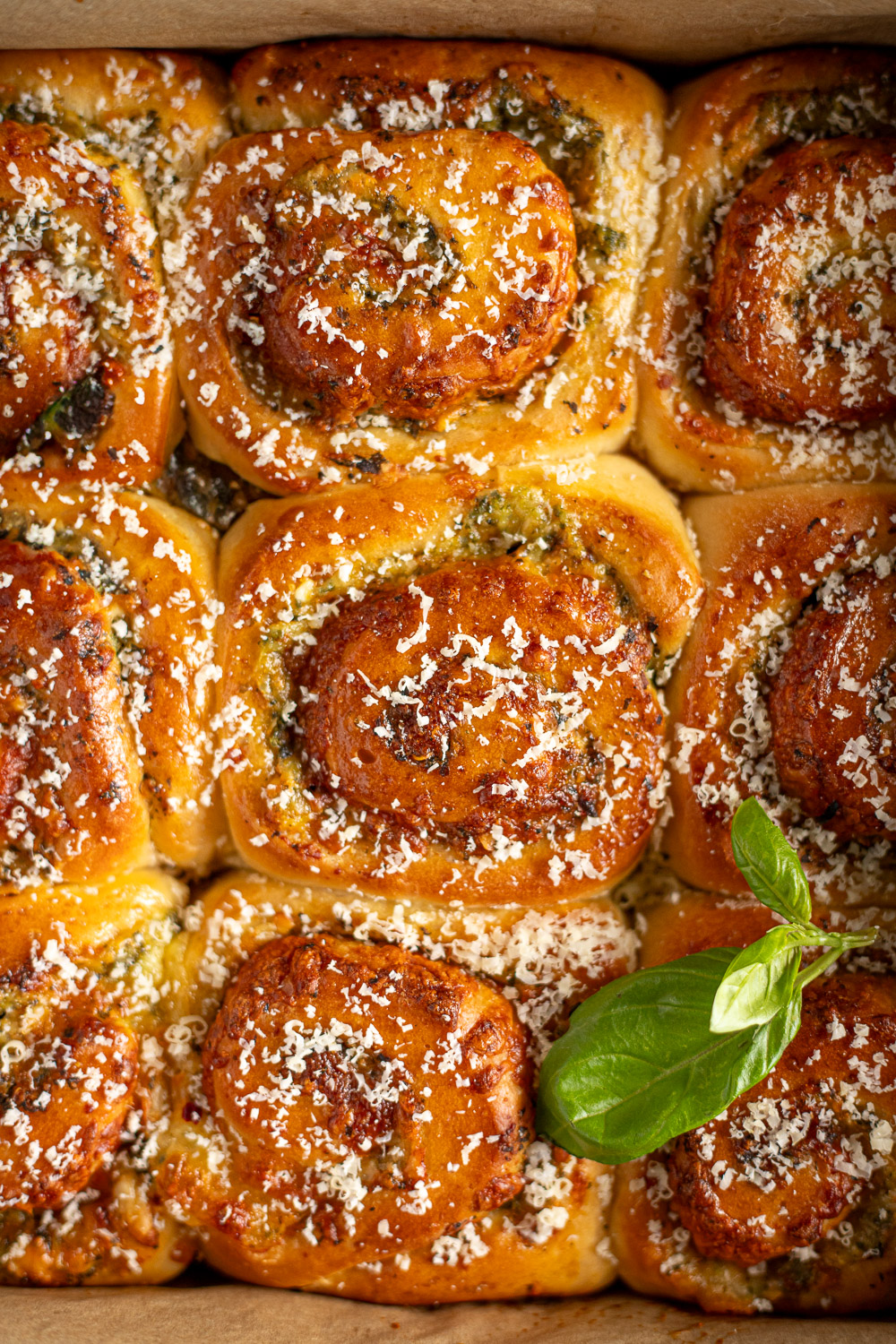
- Trim both ends of the log to reveal a clean spiral, then cut into 9 scrolls using a serrated knife or unflavoured dental floss. Arrange the scrolls evenly spiral-side up in the prepared tin.
- Cover and let rise for about 40-50 minutes, until the scrolls are puffy, nearly doubled in size, and pressing into one another.
Bake
- Halfway through the second rise, preheat the oven to 200℃ (180℃ fan/400℉). Brush the tops of the scrolls with egg wash. Bake on the middle rack for 25 minutes, or until golden brown and cooked through.
- Let the scrolls cool in the tin for 10 minutes, then use the parchment paper to lift them onto a wire rack. Allow them to cool for a further 5 minutes. Finely grate some extra parmesan on top before serving.
Notes
Nutrition
Calories: 311kcal | Carbohydrates: 31g | Protein: 11g | Fat: 16g | Saturated Fat: 4g | Polyunsaturated Fat: 1g | Monounsaturated Fat: 6g | Trans Fat: 0.002g | Cholesterol: 33mg | Sodium: 663mg | Potassium: 89mg | Fiber: 2g | Sugar: 3g | Vitamin A: 393IU | Vitamin C: 0.02mg | Calcium: 148mg | Iron: 1mg
Tried this recipe?Mention @PumpkinandPavlova or tag #pumpkinandpavlova!
