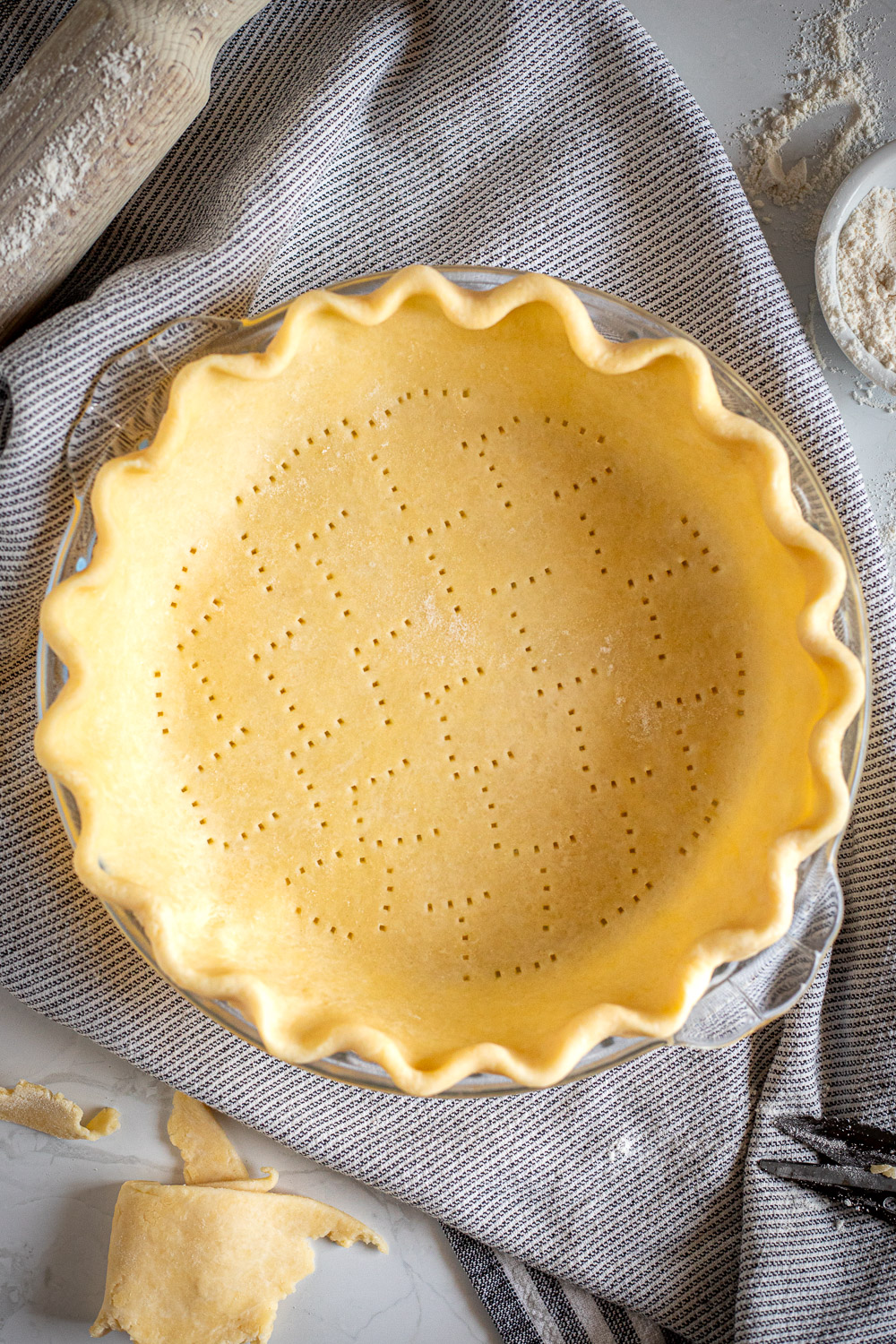
Flaky All-Butter Pie Crust (Shortcrust Pastry)
My go-to flaky, all-butter pie crust. Easy to make by hand and perfect for pies, tarts, quiches, and other shortcrust recipes (sweet or savoury).
* Please note: all cup measurements are approximate and based on Australian standard cups (250ml). For best results, weigh your ingredients with a kitchen scale.
Equipment
- pastry cutter, optional
- rolling pin
- scissors, for trimming edges
- 23 cm (9-inch) pie dish, glass recommended
- pie weights/dried rice or beans, for blind baking
Ingredients
- 160 g (1 ¼ cups, spooned and levelled) plain flour
- 110 g (about ½ cup) cold butter, cut into 1-1.5 cm (1/2-inch) cubes
- ½ tsp salt, reduce to ¼ tsp if using salted butter
- 1 tbsp granulated sugar, for sweet pies and tarts (optional)
- 1 tsp apple cider vinegar, or white vinegar (see notes)
- 45-75 ml (3-5 tbsp) ice water
Instructions
- Keep everything cold: before you begin, place your cubed butter in the freezer for 10-15 minutes. If working in a warm kitchen, place your bowl and tools in the fridge as well. If the dough starts to feel warm or sticky at any point during the process, return to the fridge to firm up before continuing.
Making the dough
- In a large mixing bowl, combine the flour, sugar, and salt. Add the cold butter and toss to coat in the flour. Using a pastry cutter, a fork, or your fingers (this is what I do), work the butter into the flour until the mixture resembles coarse crumbs, with some pea-sized pieces of butter remaining.
- Add the vinegar, then the ice water 1 tbsp at a time until the dough comes together. If the crumbs stick together when you squeeze them between your fingers, then you've added enough water. Be careful not to add too much water or the dough will be sticky and difficult to work with.
- Transfer the dough onto a lightly-floured work surface and bring it together with your hands to form a rough ball. It won't be smooth — DO NOT knead the dough.
- Flatten the dough into a disc and wrap tightly in cling film. Refrigerate the for at least 1 hour or up to 3 days.
Rolling, sealing, and crimping
- Follow the instructions in your chosen recipe if specified, or use the steps below for a standard pie crust.
- Lightly flour your work surface and rolling pin. Unwrap the dough and begin rolling from the centre outward. Every few rolls, rotate the dough a quarter turn to prevent sticking, adding more flour underneath as needed. Continue rolling until you have a circle that's roughly 30 cm (12 inches) in diameter.
- Gently fold the dough into quarters or loosely wrap it around your floured rolling pin, then unroll it onto your pie dish. Carefully re-centre if needed and press the dough down so it sits snug against the base and sides, being careful not to stretch it (this causes shrinking).
- For single crusts: use a knife or scissors to trim the excess dough, leaving about 2-3 cm (1 inch) of overhang. Fold the edge underneath itself and press to seal, then crimp or flute as desired.For double crusts: add your filling then top with the second crust or lattice. Trim excess dough so both layers are even, then fold the edges inwards together, and press to seal before crimping.
- Chill the shaped pie crust for 20-30 minutes before baking.
Blind baking (if required)
- Liberally prick the base of the chilled pie crust with a fork.
- Scrunch a large sheet of parchment paper, then smooth it out and place inside the pie crust. Fill with pie weights and spread them out evenly, making sure they support the sides.
- Bake in a 200°C (180°C fan/400°F) preheated oven until the edges are lightly golden and look set. Remove from the oven and lift out the paper and pie weights by gathering the corners of the parchment. Let the pie weights cool completely before storing away for re-use.
- Return the empty pie crust to the oven and continue baking. If you'll be baking the pie again after filling, remove once the base is set and just starting to turn golden. For a fully-baked pie crust, remove once deep golden brown all over. If any air bubbles form while baking, prick them with a fork to deflate. Set the crust aside to cool before filling.
Notes
Nutrition
Serving: 1 single crust | Calories: 1419kcal | Carbohydrates: 134g | Protein: 17g | Fat: 91g | Saturated Fat: 57g | Polyunsaturated Fat: 4g | Monounsaturated Fat: 23g | Trans Fat: 4g | Cholesterol: 237mg | Sodium: 1303mg | Potassium: 202mg | Fiber: 4g | Sugar: 13g | Vitamin A: 2749IU | Calcium: 53mg | Iron: 7mg
Tried this recipe?Mention @PumpkinandPavlova or tag #pumpkinandpavlova!
