
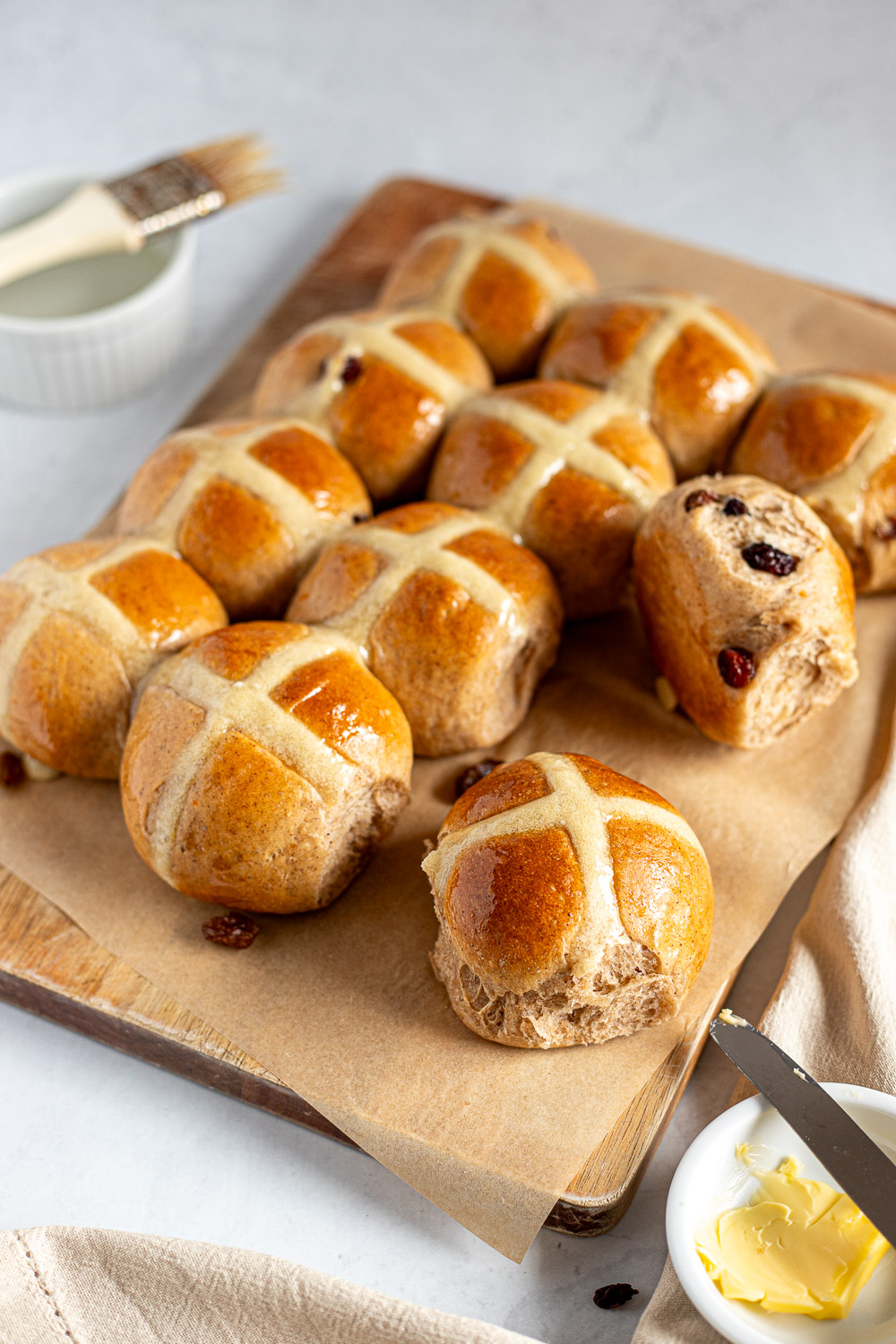
Laced with warm spices and a hint of orange, these hot cross buns owe their pillowy soft texture to the tangzhong method — a simple Asian bread-making technique. Tear, toast, and slather with butter for an Easter treat you’ll crave all year round.
Why These Hot Cross Buns are so Fluffy
If you’ve never had the pleasure of tearing into a freshly-baked, homemade hot cross bun then you haven’t truly lived, my friend. That golden, shiny crust, impossibly fluffy middle, and the heavenly aroma of cinnamon and raisins that’s so synonymous with Easter…the store-bought version pales in comparison.
And this is coming from a renowned raisin hater!
These hot cross buns are the culmination of the years I’ve spent testing and tweaking this recipe from Immaculate Bites. Basically, I tortured myself so you don’t have to.
Without preservatives, homemade buns go stale fast, but by increasing the hydration and using a little trick called the tangzhong method, I’ve made these buns lighter, fluffier, and longer-lasting.

What is Tangzhong?
Popularised by a Taiwanese cookbook author, tangzhong is a bread-making technique with Japanese origins. It’s essentially a cooked flour paste (a type of roux) added to bread dough to make breads softer and to extend their shelf life. Think Hokkaido milk bread — that cloud-like texture is tangzhong in action!
The process involves cooking a small portion of flour with either water or milk (typically a 1:5 ratio). Pre-cooking some of the flour gelatinises its starches which helps the dough retain more moisture.
It may sound fancy, but this extra step is seriously easy and makes a world of difference. Instead of turning into rocks overnight, hot cross buns made with tangzhong stay soft for up to 3 days!

Ingredient Notes
Here’s everything you’ll need to make these super fluffy hot cross buns (including the tangzhong):
- Bread flour: I recommend bread flour for most of my bread recipes, and these hot cross buns are no exception! Bread flour has a higher protein content than plain (all-purpose) flour, so it produces buns that are taller and airier with a slightly chewy outer crust — more like what you would get from a bakery. I haven’t tested this recipe with plain flour, but I suspect it would produce squishier buns with a bit less of a rise. Try at your own risk!
- Milk: Use warm to lukewarm milk for the dough to help it rise. I simply zap mine in the microwave for about 15 seconds, or until it’s comfortably warm to touch (about 38-43°C or 100-110°F). Whatever you do, don’t use hot milk!!!
- Instant yeast: Instant yeast is fast acting and can be mixed straight in with the other ingredients. You can use other types of yeast like active dry yeast or even fresh yeast, but you’ll need to proof it first. I’ve added steps for this in the recipe notes.
- Egg: Bring your egg to room temperature before adding to the dough. If you forget to take it out of the fridge (as I often do), you can submerge the egg in a bowl of lukewarm tap water for about 10 minutes to help take the chill off.
- Melted butter: Melt the butter ahead of time so it has a chance to cool down. I usually do this around the same time as the tangzhong, then leave them both for 15-20 minutes to reach room temperature (it’s okay if they’re still slightly warm).
- Sugar: Use granulated or caster sugar. You’ll need this to sweeten the dough and to make the sugar syrup.
- Spices: Cinnamon, allspice, nutmeg, and cloves give these a classic hot cross bun flavour. Feel free to experiment with other spices like ginger or cardamom. I’ve even seen recipes use coriander — though I’m not sure how I feel about that personally 🤔
- Orange zest: I use the zest of about half a medium orange which is enough to add a bit of brightness without overpowering the spices. Use more if you’d like a stronger orange flavour.
- Salt: Don’t skip or the buns will taste bland!
- Fruit: Use raisins, sultanas, currants, or a mix. I don’t think it’s strictly necessary to soak them first, but you can if you want to plump them up or add a bit of extra flavour by soaking in rum, tea, etc.
*For the full list of ingredients with measurements, see the recipe card below
Add-ins & Variations
- Fruitless/plain: Admittedly raisins aren’t very popular in my household. If you too are dealing with picky eaters (or you are one), you can leave the fruit out altogether.
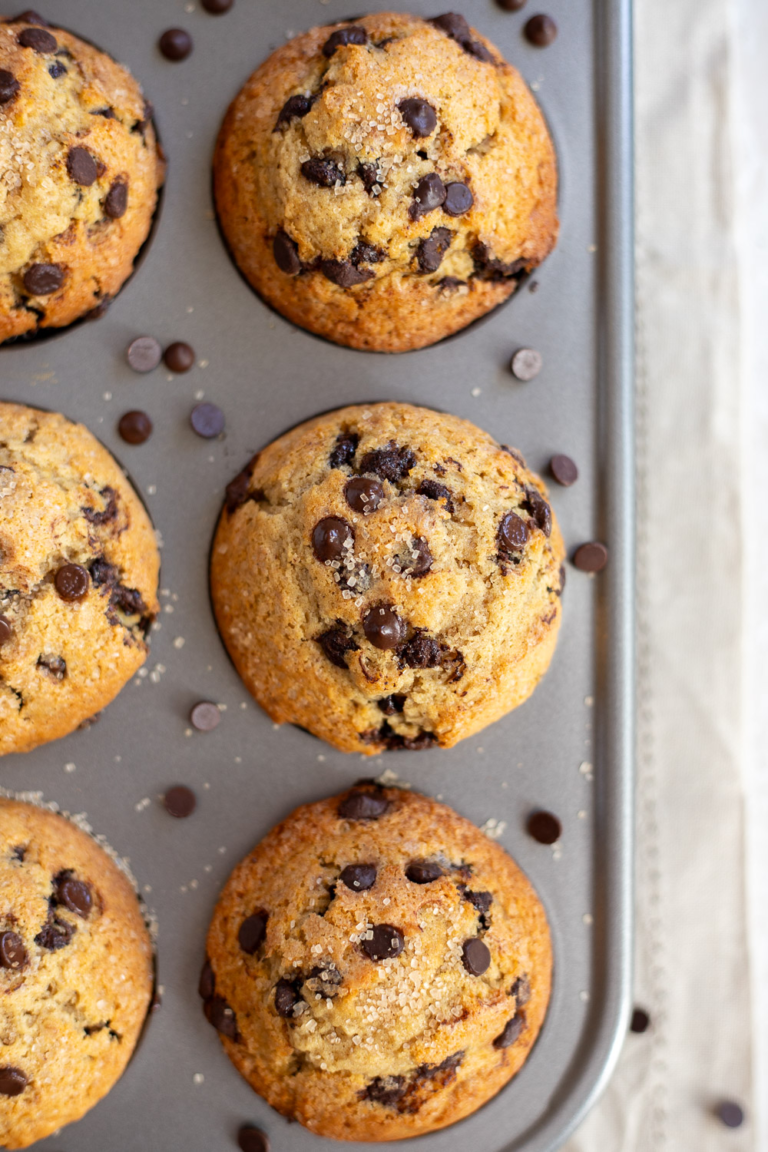
- Chocolate chips: Swap the fruit for choc chips! If kneading by hand, I would incorporate these towards the end so they don’t get too melty.
- Other dried fruits: Cranberries, blueberries, chopped dates, or candied orange peel, would also be delicious!

How to Make Hot Cross Buns
I sure hope you won’t abandon ship when you see how many steps are involved here, because you’d be missing out on some seriously good buns, and what a shame that would be 😣
This is the sort of baking you do on a slow Sunday. You’ll need about 2-3 hours total to allow the dough to rise, so plan ahead and pick out a show to watch while you wait.
Make the tangzhong
First, make a simple flour roux by cooking the flour and milk together over low to medium heat. The mixture will thicken very quickly, so watch it closely and whisk continuously to avoid lumps (some small lumps are fine).

Once it thickens to a smooth, pudding-like paste, remove from the heat and pour into a heatproof bowl. Press a piece of clingfilm directly onto the surface of the tangzhong to prevent a skin from forming, then set aside to cool.
Make the dough
Add the dry ingredients to the bowl, followed by the wet ingredients and fruit. The order doesn’t matter too much here, just be careful the yeast doesn’t come into direct contact with the salt, as this can inhibit or kill the yeast.
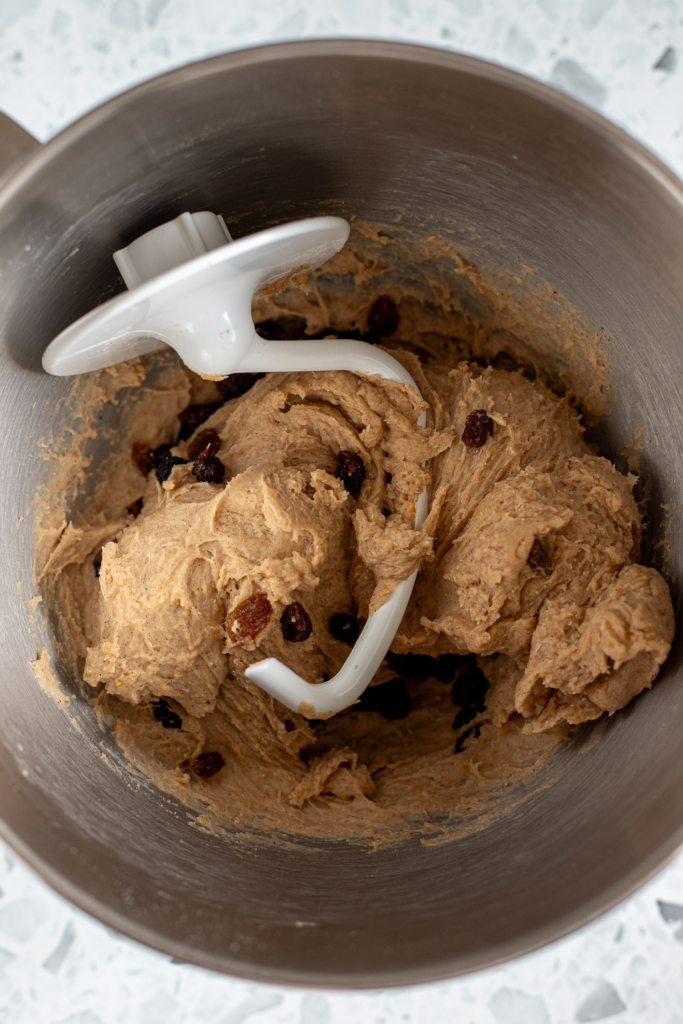
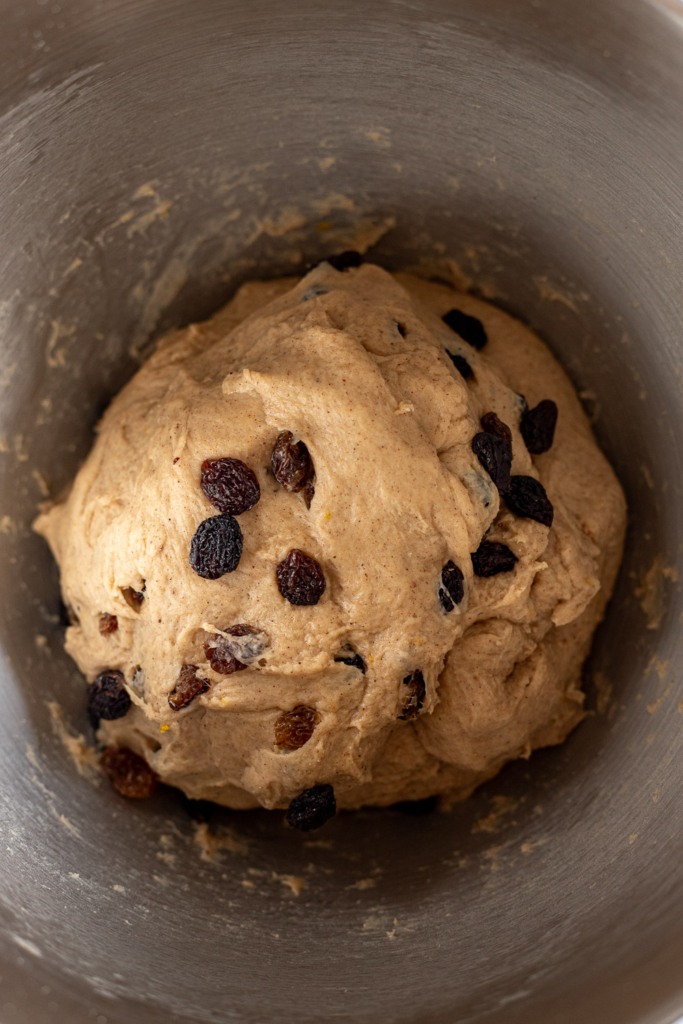
This is a sticky dough, so a stand mixer is the obvious choice if you have one. Otherwise, you can absolutely knead by hand — the result will be exactly the same, it just takes a little extra work.
- Stand mixer: Mix on speed 2 for 5 minutes, then increase to speed 4. Mix for a further 3-5 minutes until the dough is smooth, elastic, and no longer clinging to the sides of the bowl (see photos).
- By hand: Mix until a shaggy dough forms, then turn out onto a lightly floured surface, and knead for 10-15 minutes until the dough is smooth and elastic.
First rise
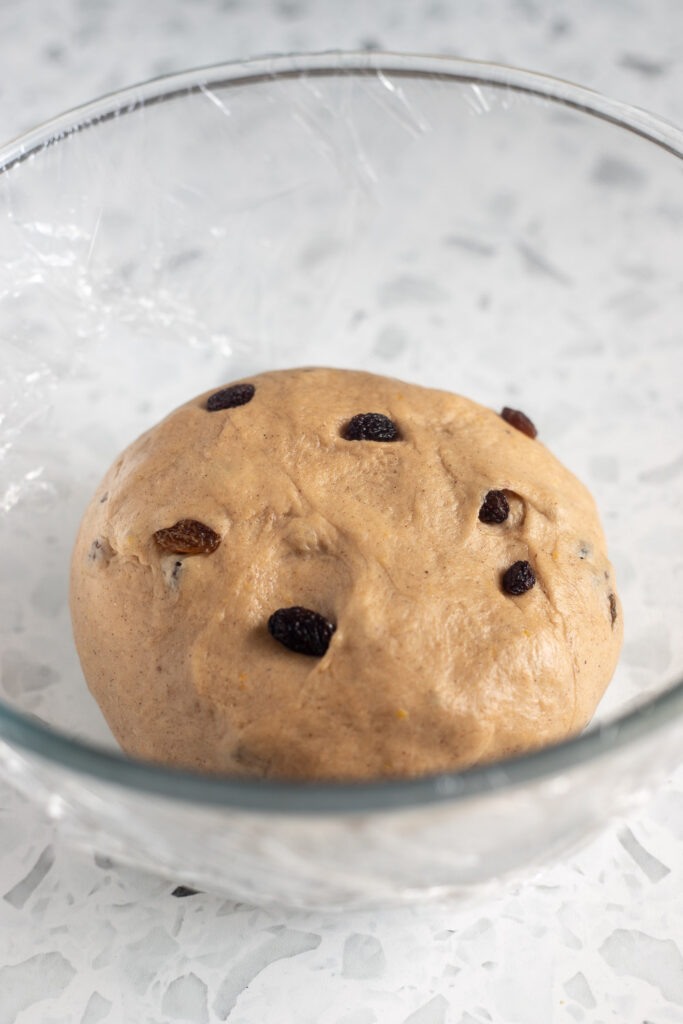
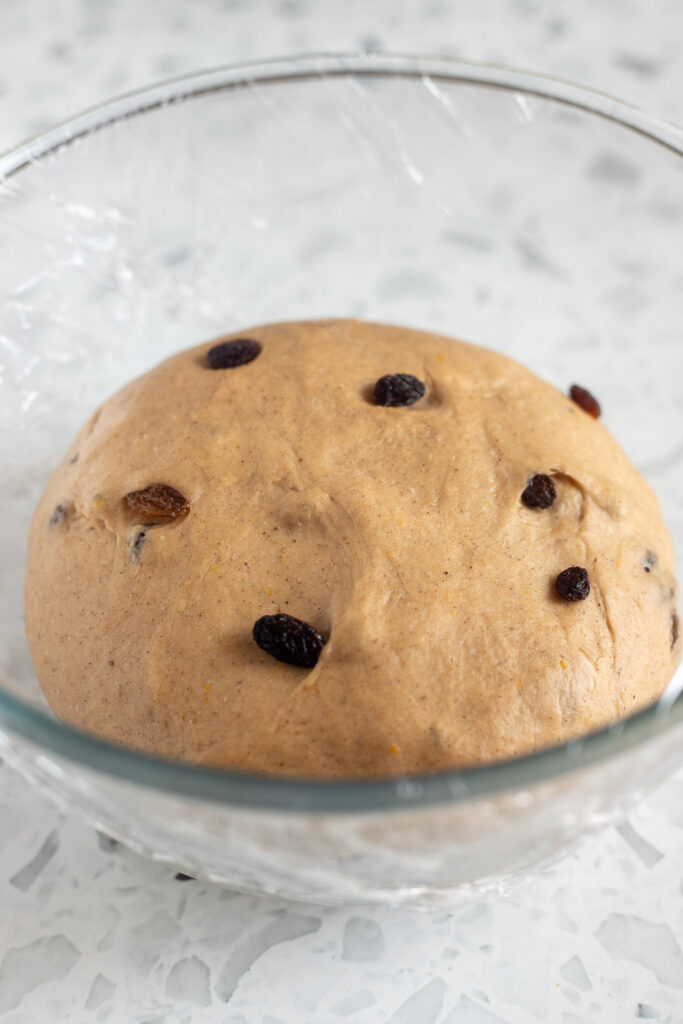
Transfer the dough to a lightly oiled bowl and cover with cling film or a tea towel. Leave in a warm, draft-free place to rise for 1-1.5 hours, or until doubled in size.
Shape the buns
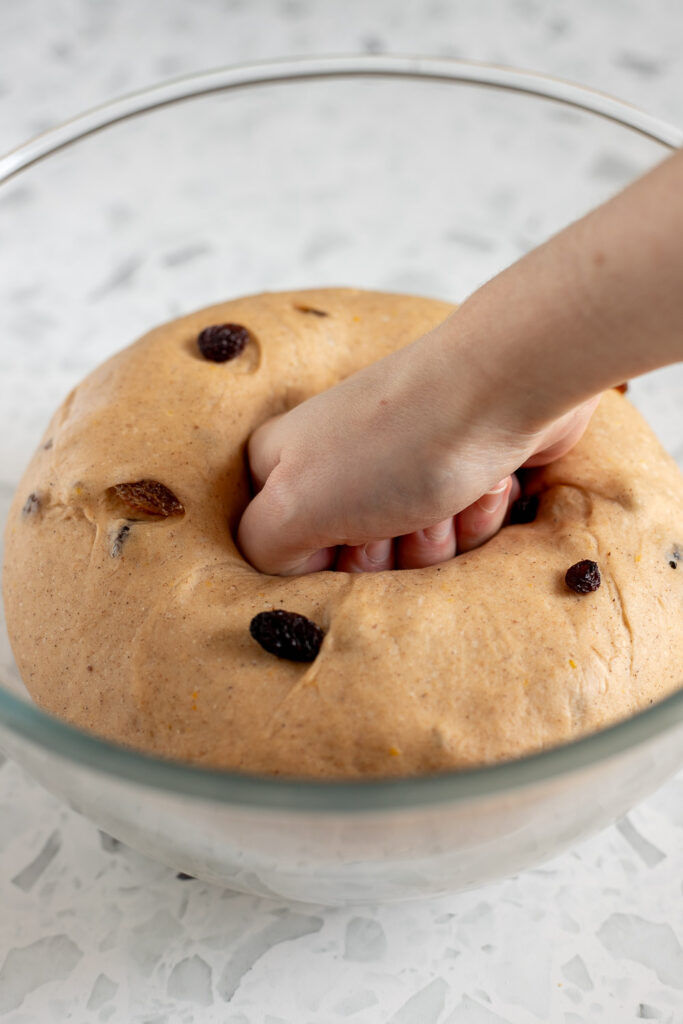
Punch the dough down and portion it into 12 pieces. You can either eyeball it or weigh the dough with a scale if you want to be precise.
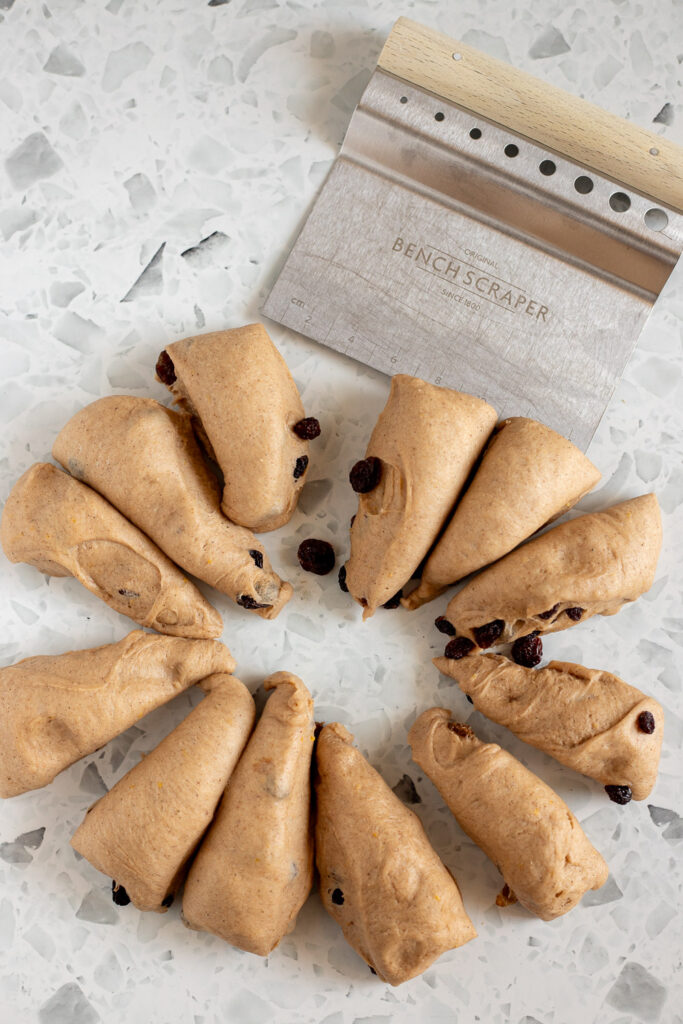
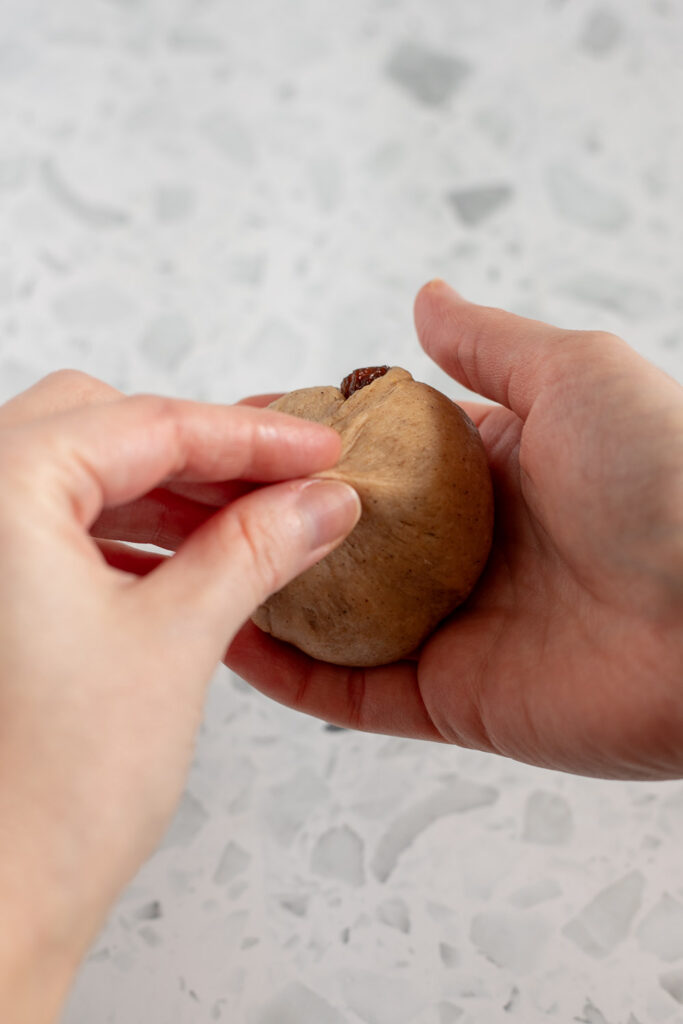
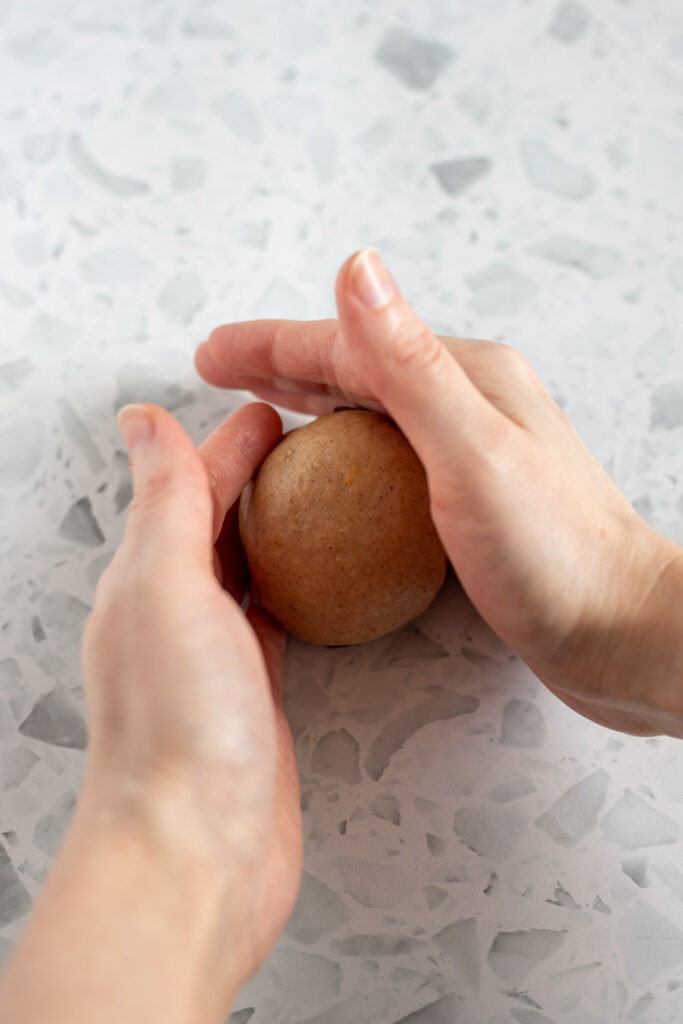
Here’s my method for shaping the buns so the tops stay smooth:
- Tuck the edges of the dough underneath itself and pinch the seam at the bottom to seal.
- Place the bun on the countertop and roll in a circular motion, keeping it seam-side down. This helps seal the bottom and creates a taught, round shape.
As you work, make sure you keep the remaining dough pieces and shaped buns covered to prevent them from drying out.
Second Rise
Place the buns about 1 to 2 cm apart in a lightly greased baking pan. Cover and let rise for 40-50 minutes or until very puffy and the buns are pressing into each other.
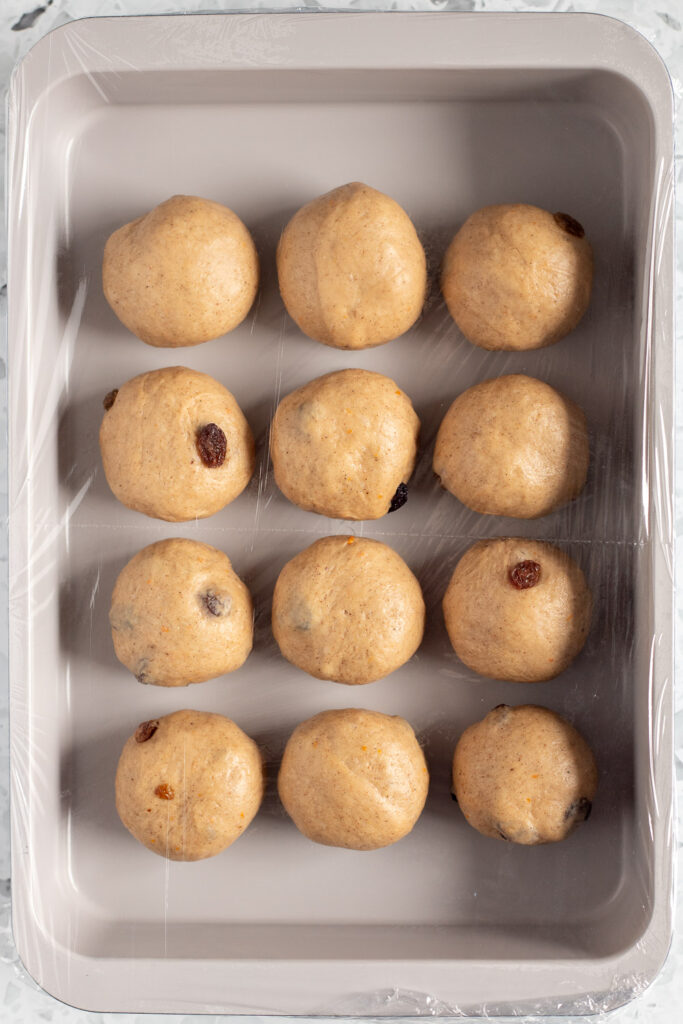
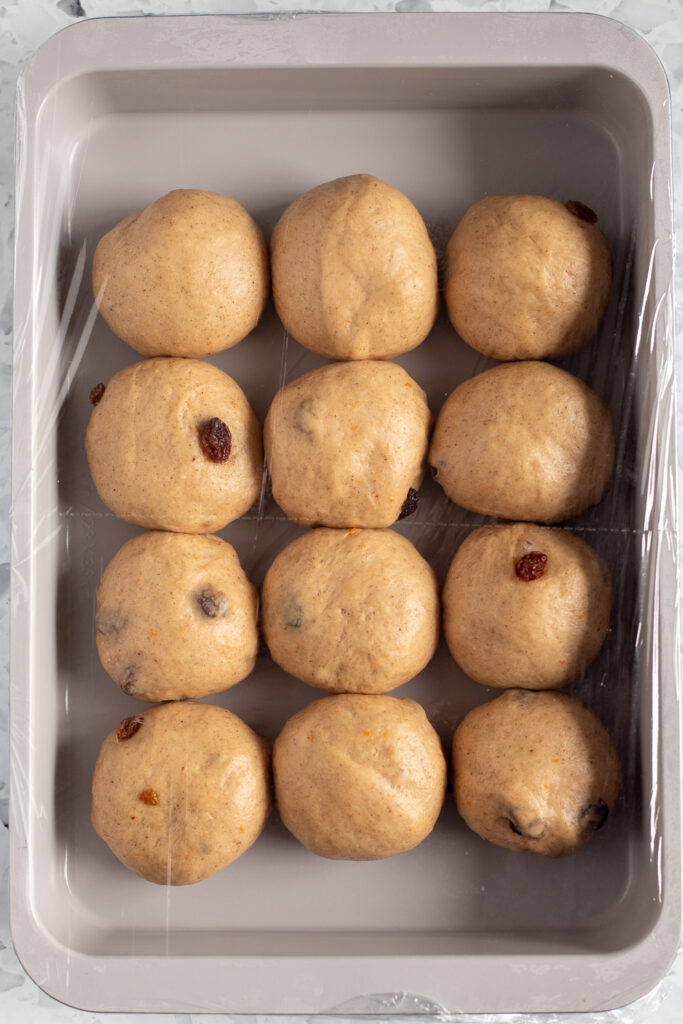
While you wait, preheat the oven to 180°C (160°C fan/350°F) and prepare the flour paste to make the crosses.
Make the crosses
Gradually mix the flour into the water to form a thick but pipe-able paste. Pipe lines over the uncooked buns to form crosses.

Bake
Bake on the middle rack for 22-25 minutes, or until the tops turn a nice golden brown colour.
Glaze with sugar syrup
Finally, simmer the sugar and water until the sugar crystals dissolve, then brush it over the tops of the warm buns. Don’t skip this — it transforms the buns from dull to beautiful and shiny!

FAQ
Hot Cross Buns (Tangzhong Method)
* Please note: all cup measurements are approximate and based on Australian standard cups (250ml). For best results, weigh your ingredients with a kitchen scale.
Equipment
- stand mixer with dough hook, optional (can knead by hand)
- 23 x 33 cm (9 x 13 in) baking pan, or large cast iron skillet
- small saucepan
- pastry brush
- piping bag or sandwich bag, to pipe the crosses
Ingredients
For the tangzhong
- 25 g (3 tbsp) bread flour
- 125 ml (½ cup) milk
For the buns
- 425 g (3 ½ cups) bread flour
- 2 ¼ tsp (1 x 7g packet) instant yeast, see notes for active dry yeast
- 185 ml (¾ cup) warm milk
- 1 egg, room temperature, lightly beaten
- 60 g (¼ cup) butter, melted and cooled
- 70 g (about ⅓ cup) granulated sugar
- 1 ½ tsp cinnamon
- ½ tsp allspice
- ¼ tsp nutmeg
- ¼ tsp ground cloves
- 1 tsp orange zest, about 1/2 a medium orange
- 1 ¼ tsp salt
- 100 g (⅔ cup) raisins/sultanas, or a mix of both
For the crosses
- 50 g (6 tbsp) bread flour or plain flour
- 60 ml (¼ cup) water
For the sugar syrup
- 40 g (3 tbsp) sugar
- 40 ml (about 2 ½ tbsp) water
Instructions
Make the tangzhong
- Add the flour to a small saucepan. Gradually add the milk while whisking, until smooth and combined. Set the saucepan over low-medium heat and stir continuously until it forms a thick paste. When you drag a spoon through the mixture, it should leave a clear trail where you can see the bottom of the saucepan.
- Scrape the tangzhong into a small bowl and press a piece of cling film directly onto the surface to prevent a skin from forming. Leave on the counter to cool to room temperature (or until slightly lukewarm). I like to melt my butter and allow it to cool at the same time.
Make the buns
- In a large bowl or the bowl of a stand mixer, combine the dry ingredients: flour, yeast, sugar, spices and salt. Add the yeast and salt to opposite sides of the bowl so they don't come into direct contact.
- Add the cooled tangzhong and melted butter, along with the warm milk, egg, orange zest, and dried fruit.
- If using a stand mixer, fit with the dough hook and mix on speed 2 for 5 minutes. Increase to speed 4 and continue mixing until the dough is smooth, elastic, and has cleared the sides of the bowl (about another 3–5 minutes). Kneading times may vary depending on your mixer, so it's best to go by visual cues.If some fruit has collected at the bottom of the bowl, transfer the dough to an unfloured work surface and briefly knead by hand just until evenly incorporated.
- If kneading by hand, mix the ingredients until they come together into a shaggy dough. Transfer to a lightly floured surface, and knead until smooth and elastic (about 10-15 minutes). The dough will be very sticky at first but will become easier to work with the more you knead. Use a bench scraper if needed, and refrain from adding excess flour as this can make the buns dense.
- Transfer the dough to a lightly oiled bowl and cover with cling film or a draped towel. Let the dough rise in a warm place for 1-1.5 hours or until doubled in size.
- Lightly grease a 23 x 33 cm (9 x 13 in) baking pan. Punch down the dough and transfer to an unfloured surface. Using a knife or a bench scraper, portion the dough into 12 pieces. Use a scale if you want to be precise (mine are 85g each).
- To shape each bun, pull the outer edges down and underneath, pinching them together to seal the bottom (If unsure, refer to the step-by-step photos). Place the bun seam-side down on the countertop and roll it in a circular motion to create tension — this smooths the bottom and forms a tight, round ball. Place the buns in the prepared pan, spacing them about 1 to 2 cm apart. NOTE: As you shape the buns, keep the rest of the dough pieces covered to prevent them from drying out.
- Cover the baking pan and let the buns rise for 40–50 minutes, until they are puffy and starting to touch. In the meantime, preheat the oven to 180°C (160°C fan/350°F).
Make the crosses
- Place the water in a small bowl and gradually whisk in the flour until smooth. Adjust with more flour or water as needed until it reaches a thick but pipe-able consistency. Transfer the paste to a piping bag or sandwich bag.
- Snip the corner of the bag and pipe vertical and horizontal lines across the buns to form crosses. Pipe slowly so the paste follows the contours of each bun.
Bake
- Bake the buns for 22-25 minutes, or until golden brown, rotating the pan halfway through. In the last few minutes of baking, prepare the sugar syrup.
Glaze with sugar syrup
- Combine the sugar and water in a small saucepan. Set over low-medium heat and cook, stirring frequently, until the sugar has dissolved. Remove from the heat and set aside.
- Brush the freshly baked hot cross buns with sugar syrup. Delicious served warm or toasted with butter!
These look amazing!!! Thanks for sharing the tangzhong method. I’ve never heard of it before and look forward to giving it a go.